
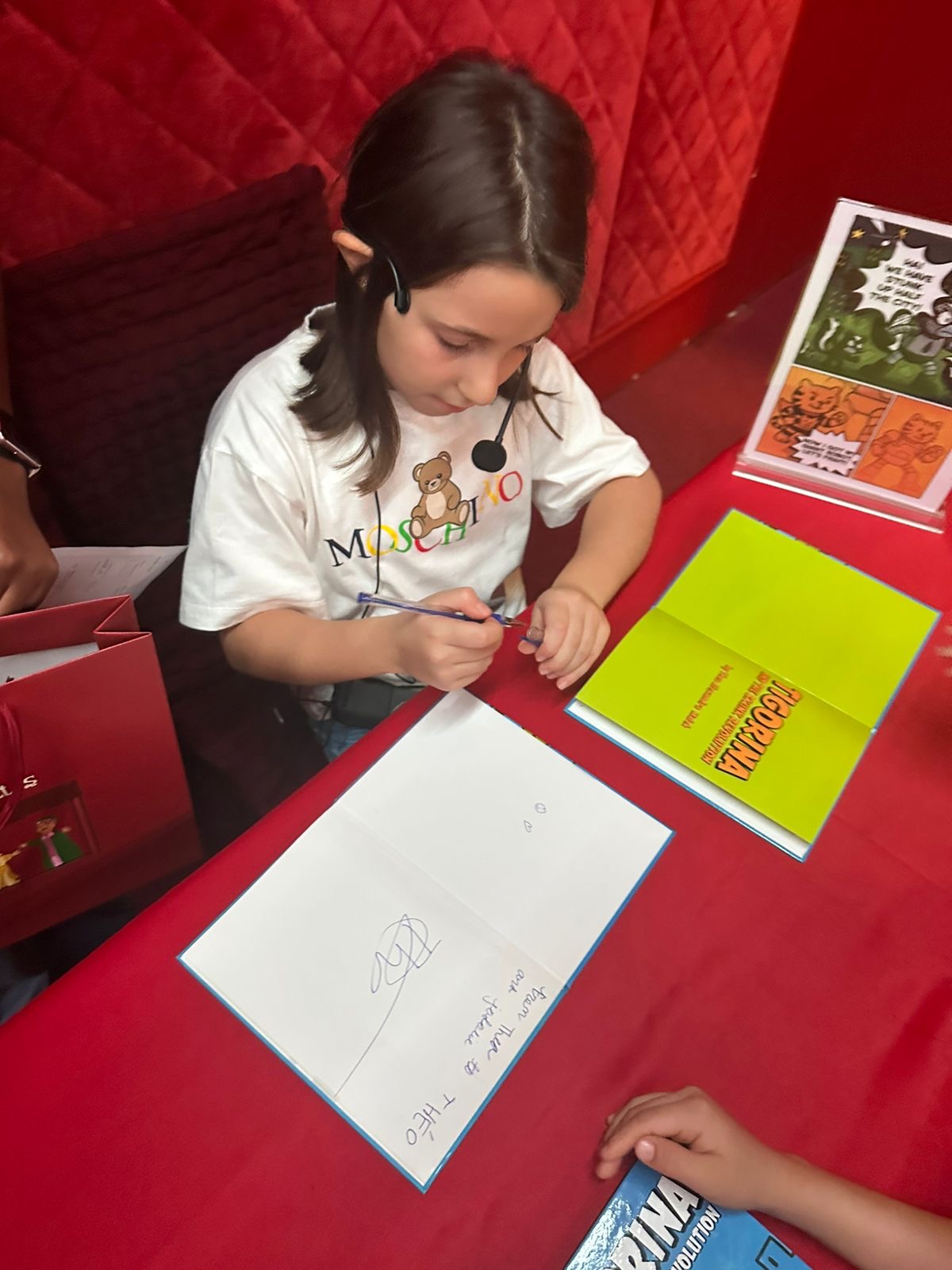

One of the most important lessons I have remembered in recent years came from an unlikely teacher: my eight-year-old daughter, Thea.
I make no apology for being a proud father. Thea is genuinely remarkable. Not because she is exceptionally talented, although she is. Not because she wins awards, although she does. But because every now and then she reminds me of something I seem to have forgotten as an adult.
This story started in November 2025.
At the time, Thea was seven years old and had become an avid reader. Comic books quickly became her obsession. Dog Man, Cat Kid, Investigators, Diary of a Wimpy Kid; if it had pictures, humour and adventure, she was interested.
The interesting thing about Thea is that reading is only one of many interests. She also plays football for her school’s U8/U9 team, takes tennis lessons, practices karate, swims, and does gymnastics. None of these activities were pushed by us as parents. Our philosophy has always been simple: if our children show interest, effort and enjoyment, we support them.
One day I noticed a few stapled A4 sheets lying on a table in her room. Curious, I picked them up.
It was a comic book.
One she had written from scratch; characters, drawings, story.
The main character was a tiger superhero called Tigorina.
I sat down and read it. To my surprise, it was genuinely funny and entertaining. Later that evening, my wife and I discussed whether we could help bring it to life.
With the school’s Winter Market approaching, we suggested turning her homemade comic into a real printed book that she could sell at her stall.
Her eyes lit up immediately.
Within a few weeks, Tigorina and the Skunk Revolution was printed.
Seventy-five copies.
At the Winter Market, forty-seven copies sold. The remaining books quickly found homes with friends and family.
The sales were nice, but that wasn’t the real victory.
The real victory was watching a seven-year-old experience what it feels like to create something from nothing and then put it into the world.
There was another lesson hidden in that process.
As parents, we were tempted to edit.
We wanted to improve the story. Correct the grammar. Remove a few words. Perhaps eliminate references to “farts.” After all, respectable books don’t usually include fart jokes.
Thea disagreed.
She insisted that the book stay exactly as she had written it because, in her words, “Kids will like it.”
She was right.
The book wasn’t written for adults. It was written for children.
The moment we resisted trying to improve it and trusted the author, we allowed the book to remain authentic and relatable.
That was lesson number one.
Trust the creator! Even when the creator is seven years old.
Fast forward to June 2026.
Through word of mouth, the book eventually reached friends of ours who own Les Marionnettes in Dubai (https://www.lesmarionnettes.net/). They proposed something extraordinary.
They wanted to host Thea as a featured author.
Not only that they wanted to turn Tigorina into a live puppet performance and have Thea introduce the story, interact with the audience and sign books afterward.
The idea was wonderful. And terrifying. For me, at least.
I immediately started worrying.
Would people come?
Would she get nervous?
Would she freeze on stage?
How should we prepare her?
How could we protect her if something went wrong?
I wanted to manage every detail.
I wanted control.
I wanted certainty.
In hindsight, what I really wanted was to protect my daughter from discomfort.
The irony is that she didn’t need protecting. She needed trusting.
A few rehearsals were organized. I attended only one. During the final rehearsal, she politely asked me to sit quietly and not comment.
Probably good advice.
On the morning of the event, while driving to the theatre, I asked her how she felt.
“I’m excited,” she said. Then she paused. “And a little nervous.”
A perfectly healthy answer.
When we arrived, she surprised me.
“Dad, I’d like to go inside by myself and prepare with the puppet master.”
I remember feeling both proud and uncomfortable.
Every parental instinct told me to accompany her.
Instead, we let her go.
A short while later, one of the theatre owners came back and asked me a question.
“Did you teach her breathing exercises?”
Apparently, they had found her backstage quietly doing breathing exercises to manage her nerves.
I occasionally mention breathing techniques to my children.
I never imagined she was actually listening.
At that moment I noticed a pattern.
Throughout this entire journey, I had consistently underestimated my daughter.
Not because I doubted her talent.
Because I doubted her capacity.
The capacity to figure things out.
To manage fear.
To rise to an occasion.
To surprise me.
The show itself was a huge success.
She introduced the story.
Interacted with the audience.
Engaged with the puppets.
Answered questions.
Signed books.
Took photographs.
Most importantly, she looked completely at ease.
If you had walked into the theatre without context, you would have assumed she had been doing this for years.
But the biggest lesson came afterward.
I realised how often we underestimate children.
And perhaps even more importantly, how often we underestimate ourselves.
Children naturally believe things are possible.
Adults spend years learning why they aren’t.
Somewhere along the way we trade curiosity for caution, imagination for practicality and courage for certainty.
Thea reminded me of something I had forgotten.
You do not need certainty before you begin.
You begin first.
Confidence often comes afterward.
Then, almost as if she wanted to reinforce the lesson one final time, she did it again the very next day.
Thea has been taking ukulele lessons for some time.
One thirty-minute lesson per week.
I rarely see her practice.
The school’s end-of-year music concert was scheduled for the following day.
Casually, she announced that she intended to perform.
My immediate reaction?
Resistance.
“Are you sure?”
“Have you practiced enough?”
“Are you ready?”
She looked at me with complete confidence.
“I want to do it.”
So she did.
The next day she stood on stage and performed The Journey Starts Today.
She played.
She sang.
She smiled.
And she enjoyed every minute of it.
Several parents commented afterward that she should sing more often and perhaps join a vocal group.
I smiled.
If only they knew how little she practiced.
But perhaps that observation misses the point entirely.
We are often taught that success comes only from preparation, certainty and mastery.
Children seem to understand something that many adults forget.
Sometimes the goal isn’t success. Sometimes the goal is simply participation. To experience. To learn. To grow. To have fun.
The outcome is secondary.
The experience is the reward.
The success, when it comes, is often just a by-product.
My daughter reminded me of that.
And for that lesson alone, the book was worth writing.
The sequel to Tigorina and the skunk revolution has been completed in draft format by Thea. It is about a new villain: Octo The Brainy Octopus
If you want to encourage Thea and buy the book, you can find it on Amazon: https://a.co/d/06ndo6Zw

Michael
DadsTalk Series
Leave a Reply